Mastering Generative Design with an Editable Prompt for Scratch Board Art
The landscape of digital creativity is shifting rapidly, moving from static asset libraries to dynamic, generative workflows. For designers, crafters, and business owners, the ability to produce unique, high-fidelity imagery on demand is no longer a luxury but a necessity. At the forefront of this evolution is the concept of the editable prompt, specifically tailored for niche artistic styles like scratch board art. Unlike traditional clipart or pre-rendered digital images, an editable prompt serves as a sophisticated set of instructions that empowers users to harness the power of artificial intelligence tools such as MidJourney, DALL·E, and Leonardo to create bespoke visuals.
Understanding the distinction between purchasing a finished image and acquiring the methodology to generate infinite variations is crucial for modern creators. An Editable Prompt - Scratch Board Art package does not provide a static JPEG or PNG file. Instead, it delivers a strategic text-based formula, often accompanied by a step-by-step guide in PDF format, that unlocks the potential to generate realistic pastel 3D liquid flow patterns, delicate illustrations, and textured artwork. This approach places the control firmly in the hands of the user, allowing for endless customization that static assets simply cannot match.
The Mechanics of Text-to-Image Customization
To fully appreciate the value of a specialized prompt, one must understand how modern AI art generators interpret language. These models do not "search" for images; they synthesize them pixel by pixel based on semantic understanding. When a user utilizes a high-quality editable prompt designed for scratch board aesthetics, they are leveraging a carefully engineered string of tokens that define lighting, texture, medium, and composition.
The core advantage of using a structured prompt lies in its editable structure. A generic request like "draw a cat" yields unpredictable results. However, a professional-grade prompt includes specific parameters regarding the simulation of scratch board techniques—where white lines are scratched onto a black inked surface to create contrast and depth. By inserting specific variables, such as replacing a bracketed placeholder like "[xxx]" with a desired color or subject, the user directs the AI to maintain the artistic style while altering the content. This ensures consistency across a project, whether creating a series of product labels, a collection of stickers, or a cohesive brand identity.
Furthermore, these prompts often incorporate advanced descriptors to achieve delicate realistic details. They might specify the grain of the paper, the pressure of the stylus, or the interplay of light on a 3D liquid flow pattern. This level of granularity allows hobbyists and professionals alike to bypass the trial-and-error phase of prompt engineering, providing a reliable foundation for high-quality output.
Applications Across Industries and Creative Fields
The versatility of an Editable Prompt - Scratch Board Art extends far beyond simple hobbyist experimentation. Its applications span various sectors where visual distinctiveness is paramount.
- Product Design and Packaging: Brands seeking a tactile, artisanal look can use these prompts to generate unique patterns for packaging. The ability to create seamless textures means designers can wrap products in custom-generated scratch board motifs that stand out on retail shelves.
- Digital Marketing and Social Media: Content creators require a constant stream of fresh visuals. With an editable prompt, a marketer can generate a month's worth of themed posts featuring consistent artistic styling but varying subjects, ensuring brand recognition without visual fatigue.
- Educational Materials: Educators can create engaging, high-contrast illustrations for worksheets or presentations. The scratch board style, with its stark blacks and whites, is particularly effective for printing and maintaining clarity in educational contexts.
- Pet Portraiture and Custom Gifts: As noted in many creative circles, pet lovers often seek unique ways to memorialize their companions. By swapping the subject variable in the prompt, a user can generate stunning, stylized portraits of specific breeds or individual pets, transforming a standard photo reference into a piece of art.
- Merchandise Creation: For those running print-on-demand businesses, the ability to generate seamless patterns for t-shirts, mugs, and stickers is invaluable. The prompt ensures that the generated art is optimized for print resolution and aesthetic appeal.
Navigating the Workflow: From PDF to Masterpiece
Implementing this technology requires a shift in workflow, moving from file management to instruction management. When a user acquires a prompt package, they typically receive a ZIP file containing a PDF document. This document is not merely a receipt but a functional tool. It contains the master prompt and clear instructions on how to manipulate it.
The process generally follows a logical sequence. First, the user opens the PDF and copies the editable prompt string. Next, they identify the variable sections, often marked by brackets or specific placeholders. For instance, if the goal is to create a blue-themed abstract background, the user replaces the color placeholder with "pastel blue" or "cyan." If the objective is a specific subject, such as a "vintage bicycle," that term is inserted into the subject slot.
Once the text is customized, it is pasted into the interface of an AI tool like MidJourney or Leonardo. The AI then processes the request, interpreting the stylistic constraints of the scratch board technique while rendering the new subject matter. This cycle can be repeated endlessly. If the first result is close but needs more contrast, the user tweaks the descriptive adjectives in the prompt and regenerates. This iterative process is where the true power of the editable prompt shines, offering a level of control that pre-made image packs cannot provide.
Advantages Over Traditional Digital Assets
Comparing an editable prompt system to traditional stock photography or clipart reveals significant differences in utility and long-term value. Traditional assets are finite; once you buy a pack of 50 images, you have exactly 50 images. If you need a variation of one of those images—perhaps the same style but a different angle or color—you are forced to search for another asset or hire a designer to edit it manually.
In contrast, an Editable Prompt - Scratch Board Art offers endless possibilities for customization. The "asset" is the logic behind the image generation, not the image itself. This means the user owns the capability to generate thousands of unique variations without additional licensing fees or storage constraints. It is a scalable solution for businesses that need to adapt their visual content quickly.
Additionally, there is the issue of exclusivity. Stock images are sold to multiple buyers, meaning a competitor might use the exact same graphic. AI-generated art, driven by a unique combination of prompts and seeds, creates a one-of-a-kind visual every time. This reduces the risk of brand dilution and ensures that marketing materials remain distinct.
Technical Considerations and Best Practices
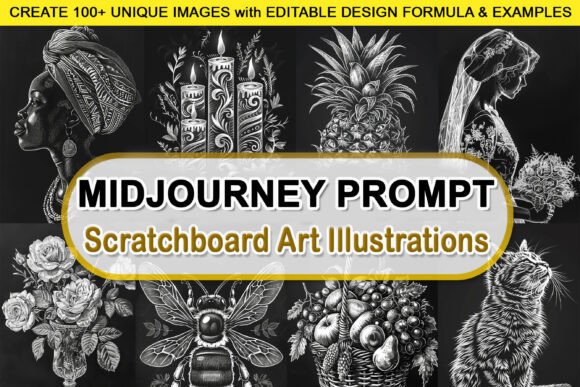
While the potential is vast, successful utilization of these prompts requires an understanding of the underlying technology. Users must be aware that the product they are purchasing is the prompt and guide, not the final rendered images shown in preview galleries. These previews serve as demonstrations of the prompt's capability, illustrating the quality of the "realistic pastel 3D Liquid Flow Patterns" or intricate scratch board details one can achieve.
To maximize results, users should familiarize themselves with the specific nuances of their chosen AI platform. For example, MidJourney may respond differently to aspect ratio commands compared to DALL·E. A well-constructed prompt will often include universal descriptors but may also offer tips on platform-specific parameters. It is advisable to start with the provided instructions exactly as written before experimenting with modifications. This establishes a baseline of quality.
Furthermore, understanding copyright and usage rights regarding AI-generated content is essential for commercial users. While the prompt itself is a tool, the ownership of the generated images depends on the terms of service of the AI platform being used and local laws. Professionals should ensure their workflow complies with these regulations, especially when creating assets for client work or commercial products.
The Future of Customizable Art Generation
The rise of editable prompts signifies a broader trend toward democratization in design. Tools that were once the domain of highly skilled illustrators or those with extensive technical knowledge are becoming accessible to a wider audience. A crafter with no drawing skills can now produce professional-grade scratch board illustrations. A small business owner can generate custom packaging designs without hiring an agency.
This shift encourages a focus on curation and direction rather than manual execution. The skill set of the future creator involves knowing how to ask the right questions—how to formulate the perfect prompt to extract the desired vision from the machine. Resources like the Editable Prompt - Scratch Board Art act as bridges, translating complex artistic concepts into actionable text commands.
As AI models continue to evolve, becoming more adept at understanding nuance and context, the value of well-engineered prompts will only increase. They will become the standard currency of digital design, enabling a level of personalization and speed that was previously unimaginable. Whether for creating a single piece of pet artwork or scaling a global design operation, the ability to edit and refine the generative process is the key to unlocking true creative potential.
In conclusion, embracing the workflow of editable prompts transforms the way we interact with digital art. It moves the user from a passive consumer of static files to an active director of visual creation. By leveraging the detailed instructions found in a high-quality prompt guide, creators can produce seamless, realistic, and deeply personalized artwork that resonates with audiences and stands out in a crowded digital marketplace. The journey from a simple text string to a stunning visual masterpiece is now open to anyone willing to explore the possibilities of generative AI.